GB
  
You are currently viewing the United Kingdom version of the site.
Would you like to switch to your local site?
4 MIN READ TIME

SOUNDPOST

Letters, emails, online comments

LETTER of the MONTH
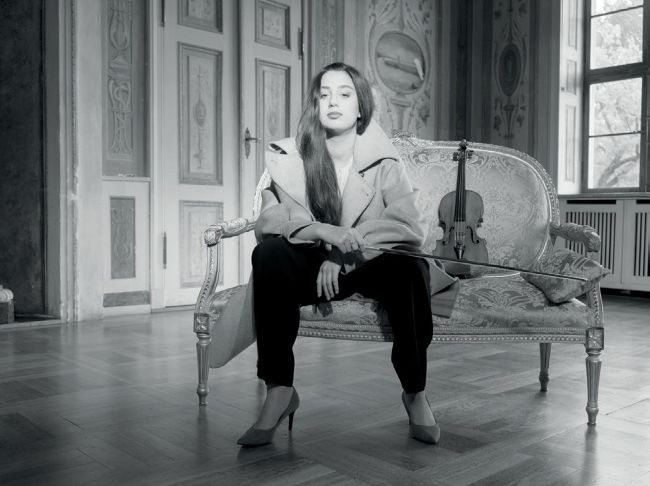
Lir Vaginsky
GUY HECHT

ALTERNATE STRATEGIES

Violinist Lir Vaginsky’s online article ‘Why I write my own cadenzas’ (bit.ly/4hM5XMy) describes, with disarming humility, a personal journey into the very wellspring of Mozart’s genius. Vaginsky’s straightforward account of her experiences as she composed the sublime cadenzas she uses in her recordings of the Mozart K207 and K211 violin concertos provides a unique glimpse into the bond between composer and performer: a bond that transcends time, history, even the boundary between life and death.

The idea of performers writing their own cadenzas is very much in keeping with the original meaning of the term as it emerged in the early Italian Baroque. In fact, early cadenzas were seldom ‘written’ at all but were often spontaneous improvisations. To improvise freely in a Mozart or Haydn-period concerto, one must (like Vaginsky) be steeped in the stylistic mannerisms of that age. Vaginsky’s article left me wondering what other pathways might be explored by string players aspiring to create such splendid and fitting cadenzas. Vaginsky’s route – beginning with her first childhood study of the violin – is probably the best way. From my personal experience, I believe another avenue towards improvisation in a late Baroque-to-Classical style might be found in the preserved works of the great viol virtuosos Marin Marais and Carl Friedrich Abel. These solo bass viol compositions consist primarily of pure improvisations that were (thank God) committed to notation – not by themselves but by their adoring students. After listening with rapture to Vaginsky’s Berlin recordings, I wouldn’t be surprised if she were familiar with these grandiose and impassioned time capsules of transitional Baroque/Classical musical spontaneity. The surviving works of Marais give the modern ear a taste of the riches that must have haunted musical ears of the late 1600s to early 1700s. Tap into this spirit and I believe one finds an appropriate muse for a Mozart-style cadenza.

Read the complete article and many more in this issue of The Strad
Purchase options below
If you own the issue, Login to read the full article now.
Single Digital Issue April 2025
 
£5.99 / issue
This issue and other back issues are not included in a new subscription. Subscriptions include the latest regular issue and new issues released during your subscription. The Strad
Annual Digital Subscription £54.99 billed annually
Save
23%
£4.58 / issue

This article is from...


View Issues
The Strad
April 2025
VIEW IN STORE

Other Articles in this Issue


Editorial
Editor’s Letter
By Emma Baker
FRONT
New Products
The latest products for string players
Life lessons
The memories and opinions of German cellist Maximilian Hornung
Postcard from Heidelberg
The 20th anniversary of the city’s String Quartet Festival
FEATURES
Arabella Steinbacher
The German violinist’s latest album pairs Beethoven’s Violin Concerto with a new work written for her by Georges Lentz. Pauline Harding finds out more
Concert Works by Screen Composers
From Erich Wolfgang Korngold to Hildur Guðnadóttir, Rita Fernandes looks at the concert pieces by composers better known for their work writing for the movies
Makers of Markneukirchen
Although the German town is best known for its production-line instruments, much of its output leaned towards the high-end market, as Bruce Babbitt explains
Session Report
Adrian Butterfield and Gavin Kibble of the London Handel Players talk to Robin Stowell about the group’s latest album of quartets by Telemann
Advice from peers
String players’ musical education lasts long after their time at conservatoire. Charlotte Gardner discovers the best tips they've had from their contemporaries
REGULARS
In Focus
A 1923 Guarneri copy made by the Berlin-based luthier Michael Dötsch
Trade Secrets
Sharon Que demonstrates her method of wing crack repair using silk
My Space
Bernhard Ritschard of Lübeck
Making Matters
The use of tulipwood
Masterclass
Benjamin Beilman gives his thoughts on performing the first movement of Saint-Saëns’s Violin Concerto no.3
Technique
Double bassist Susan Hagen with tips on how to find one’s individual technique
Reviews: Concerts
A critical round-up of performances
From The Archive
From April 1925
Sentimental Work
Violinist Frank Peter Zimmermann on Schumann’s Violin Concerto
ADVERTISEMENT
LARSEN STRINGS
larsenstrings.com
GEWA
gewastrings.com
WARCHAL
www.warchal.com
STRADPET
Accademia Stauffer Cremona
KARIN ROST
www.karin-rost.com
PIRASTRO
CORENE
www.neo-ebene.com
negricases
www.negricases.com
thestrad
thestrad@thestrad.com
THE STRAD SHOP
WWW.THESTRADSHOP.COM
Fiedler Berlin
www.fiedler-cases.de
stentor-music
www.stentor-music.com
the Strad
PARKHOUSEAWARD
www.parkhouseaward.com
luisandclark
luisandclark.com
barbican
Iso.co.uk/portrait
ADVERTISERS INDEX
Youth CLASSICS
www.youth-classics.org www.draganov.ch
INTERNATIONAL CONFERENCE
www.esta2025.org
HIERONYMUS KÖSTLER
mail@koestler-violins.com
ROBERTSON & SONS VIOLIN SHOP, INC.
RobertsonViolins.com
MFISCHERVIOLINS
www.mfischerviolins.com
THORVALDSSON
PENTATON
www.pentatonemusic.com
Chat
X
Pocketmags Support