INTERVIEW
Jon McCormack
With his book due out for Earth Day, the conservationist speaks to Niall Hampton about photographing patterns in nature
Right: California, 2020. “In the blue hush of twilight, the beach rocks of northern California begin to resemble China’s Karst mountains. Here, light, scale and erosion briefly align.”
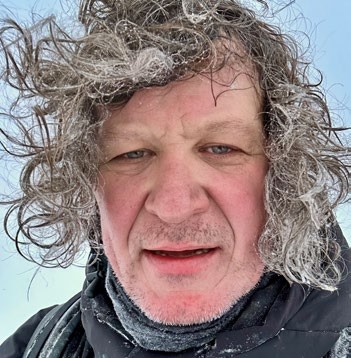
Jon McCormack
Jon McCormack
Photographer and conservationist
The arid, wide-open spaces of the Australian Outback engendered a love of the natural world in the young Jon McCormack, who turned to photography to document it.
Studying engineering and then computer science led Jon to a career in the tech industry, and he currently works for Apple, developing the lens and camera software for the iPhone.
Jon is a Fellow of the Royal Geographical Society, serves on the board of the Rainforest Alliance and is a founding board member of the oceans conservation organisation SeaLegacy.
He co-founded The Kilgoris Project, which partners with the local community to support the education of children in a Maasai village in south-west Kenya. Jon lives in California, USA.
jonmccormack.com Instagram: @jonmccormackphoto
Earth Day takes place on 22 April this year, and is a show of support for environmental conservation and protection – a reminder of the responsibility that humankind has to safeguard the planet for future generations. (For more information about the day, and how to get involved, visit www.earthday.org).
Published to coincide with Earth Day, a new book by photographer and conservationist Jon McCormack is titled Patterns: Art of the Natural World. A collection of photography that explores the hidden geometry and unseen patterns of the planet, it is the author’s first monograph, with most of the images having been captured since 2020.
Described by the publisher as a “meditation on the geometric patterns that define our planet’s most breathtaking landscapes and ecosystems”, Patterns documents how the earth reveals itself as “both architect and storyteller”. Over 168 pages, the reader will savour images that range from microscopic mineral blooms to vast aerial geometries, gathered from across the world.
Keen to find out more about the book, we spoke to Jon McCormack on a video call from his home in California, USA.
You grew up in the Australian Outback. For any readers who aren’t familiar with it, can you describe what this vast territory is actually like?
The overwhelming thing to say about Western Queensland is that it’s flat – we don’t have rolling hills. I grew up on a farm that had sheep, cattle and wheat. It was semi-arid, with only about 16 inches of rain a year, and life there was pretty harsh. The closest town was about 15 miles away. The mailbox, on the main road, was a mile from the house, and it was 15 miles to school every day on the school bus.
And did living in the Outback develop your love of the natural world and eventually photography?
Yes, it did. Our farm had been in the family for 125 years, and we were the fifth generation of farmers there. My father embraced regenerative agriculture long before it was an interesting thing. The farming world in Australia had largely gone chemical, but Dad was resistant to that. His view was that we’d been farming the land for over 100 years and it had been fine, so there was no real reason to change. He also said that we didn’t know what this was going to do to the earth.