“I CONSIDER IT A MASTERPIECE”
Mind Games’ producer and creative director Sean Ono Lennon on “the honour” of working on his dad’s music, rediscovering “Aisumasen” and exploring the Mind Games universe. “I want to get as much attention for his music and make it as fun as humanly possible…”
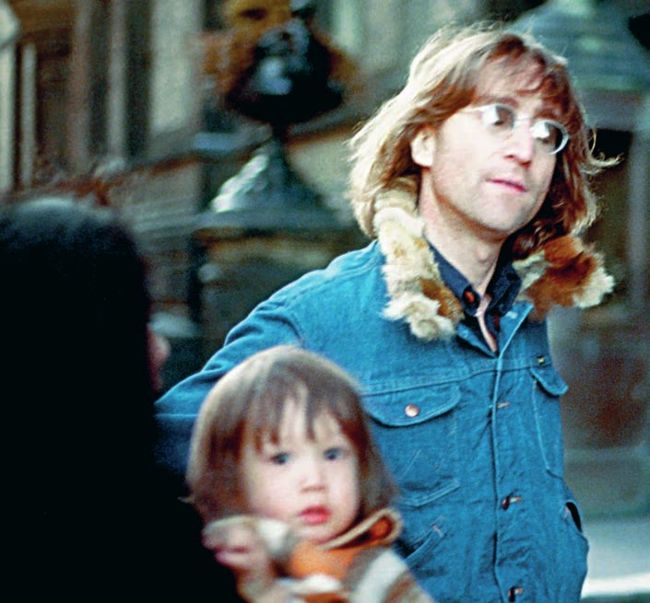
Beautifulboy:
SeanOnoLennon with his dad, 1977
©YOKO ONO LENNON; VINNIEZUFFANTE/ GETTY IMAGES; LIONELHAHN / GETTY IMAGES
U
NCUT: What’s your personal overview of Mind Games?
ONO LENNON:
To me,
it
sounds like he was working very hard to make a more polished record after what had been a period of raw rock’n’roll activism with Some Time In New York City. The fact that he was producing himself — and doing an incredible job without Phil Spector’s help, while in the midst of a separation with my mother — it must have been a difficult time for him. I think he really did an amazing job. The songs stand for themselves and after all these years have come to represent some of his best work to many fans.
I had an amazing time overseeing the mixes and was really struck by the level of musicianship throughout. The band is exceptional, and you can tell that the musicians are working hard to bring as much beauty to each song as they can manage. My father famously made the album cover himself, an amazing collage with my mother as a mountain hovering over him as he recedes into the distance — a visually striking image that says a lot about the time and what they were going through personally.
What are the album’s strengths?
His production and his singing. Some of his best vocal performances are on this record. Especially the outro of “Mind Games”, he slides up effortlessly to a falsetto on the word “love” that is as haunting and inspiring as anything he ever sang with The Beatles.
There’s a sense this record has been unfairly overlooked — why do you think that might have been?
I think that kind of thing happens a lot. Sometimes the world isn’t ready to give certain music a chance, or even understand it. I don’t think that’s a reflection of the music’s quality. My parents had just confused a lot of people between Two Virgins and Sometime In New York City, they had thrown people off a bit — and frankly had thrown themselves off too, getting mixed up with some questionable characters and getting surveilled by the FBI, then realising many of the so-called revolutionaries they had linked up with were actually not the best people. It was
“I love getting to be that intimate with my dad’s music”
SEAN ONO LENNON
a strange time and I think the music and the reception of it were connected to the changes that were happening.
But I do think Mind Games is clearly my dad getting back on track, after what was a very experimental and volatile period that was very creatively fruitful, but at times went a bit out of control. Plus, it was a very competitive time, with a whole new generation of talented young artists dominating the charts. But what does that say about Mind Games as an album? Not much in my view. People for whatever reason were not in the right mood for it. But looking back and listening, I think we can all see it for the incredible album that it is. I do consider it a masterpiece.
What were your objectives for Mind Games when you began working on the reissue?
Well, for me it’s about trying to find the most interesting and creatives ways I can of revisiting the music. If I’m going to spend time working on Dad’s music, I want to work as hard as I can to innovate and be creative. An artist like my dad is competing against a whole new world of music and entertainment. To get him the attention he deserves, I feel I have to really work hard on trying new things. I want to get as much attention for his music and make it as fun as humanly possible for the fans. To me, there’s no point in re-releasing his music if I don’t try and push it as far as I can in terms of creativity.
As you worked on Mind Games, did anything surprise you about this period in your parents’ life?
Listening
to Ken Ascher’s tracks really blew me away. I’m such a big fan of his work with Jim Henson, it was amazing realising all the little tricks he pulled with the keys. The musicianship is truly stellar on this album throughout. And, truthfully, I didn’t realise what a good song “Aisumasen” was until I worked on bringing out the best bits.
What was your favourite part of the process?