THE MAKING OF...
“When The Revolution Comes”
How a black collective’s radical call to arms became one of the earliest influences on hip-hop. “We were the vanguard of the revolution…”
by The Last Poets
“OUR poetry basically came from the people,” says Abiodun Oyewole, co-founder of black radicals The Last Poets. “‘When The Revolution Comes’ was taken from a popular expression on the streets of Harlem in the late ’60s. That line is what makes the poem happen. And it was very interesting to see how it developed.”
Formed on May 19, 1968 – the late Malcolm X’s birthday and six weeks after Martin Luther King’s assassination – The Last Poets arose from the civil rights movement, but demanded a more extreme approach to self-determinism. A Harlem writers’ workshop known as the East Wind served as HQ, a place where poetry, music and political insurrection coalesced, inspired by Amiri Baraka’s militant Black Arts Movement.
The raw concision of The Last Poets’ work found its ideal foil in the rhythmic urgency of jazz. “Poetry was a wonderful medium,” explains early member Felipe Luciano. “It pointed black people to another way of looking at the history. It’s not just the Underground Railroad or Martin Luther King or Malcolm X or the slave revolts. It’s the yearning of the soul for freedom. And in those days, people didn’t really talk about that.”
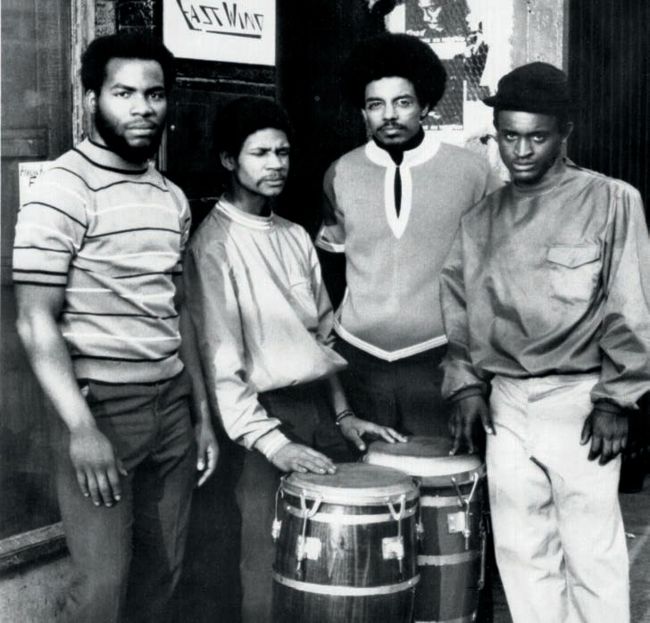
The Last Poets, 1970: (l–r) Abiodun Oyewole,Nilaja Obabi,JalalMansur NuriddinandUmar BinHassan
MICHAELOCHSARCHIVES/ GETTYIMAGES; CHARLESNORFLEET/ GETTY IMAGES ROBERTO RICCIUTI / GETTY IMAGES ; JOY MALONE /GETTY IMAGES
The group eventually splintered into two entities – The Original Last Poets (Luciano, David Nelson and Gylan Kain) and The Last Poets (Oyewole, Umar Bin Hassan, Jalal Mansur Nuriddin and percussionist Raymond ‘Nilaja’ Hurrey) – though their ideals remained the same. The latter signed to local producer Alan Douglas’s jazz-oriented label, committing their hard-edged polemic to vinyl, backed only by Nilaja’s spare conga-playing. “We were done in an hour,” Douglas told Uncut in 2011, three years before his death. “Cheapest record I ever made.”