THE ROLLING STONES
Ode To A Highflying Bird
From smoky nights at the Ealing Jazz Club to the dawning of their first imperial phase, Rob Hughes discovers how CHARLIE WATTS turned the Rollin’ Stones into The Rolling Stones.
THE Ealing Jazz Club didn’t promise much from the outside. Situated opposite Ealing Broadway tube station, wedged between a jeweller’s and a tea shop, a tight set of steps led down into a faceless cellar. “It had a capacity of about a hundred people, maybe a few more,” recalls frequent visitor Dick Taylor. “There was a cloakroom, then a narrow room with the bar at one side. It was only a small club. But you’d walk through the door and it would sound like Chicago in there. The atmosphere was incredible.”
On March 17, 1962, the club began to operate as Britain’s first regular rhythm’n’blues venue. Led by guitarist Alexis Korner and harmonica player Cyril Davies, Blues Incorporated took over on Saturday nights, providing a nexus for the growing number of R&B bands that sprouting up around London and the suburbs.
But the Ealing Club wasn’t just about the music. It was a place where crucial connections were made, a gathering of kindred souls. “We all saw ourselves as crusaders for the blues,” says Paul Jones. “We were all more or less the same age. To find all these other likeminded people down there was very significant.”
One of these figures was 20-year-old Charlie Watts, then drummer with Blues Incorporated. “Charlie came from a jazz background and was just a brilliant drummer,” says Taylor. “You had to be seriously good to get into Alexis’s band. Everybody was aware of that. Not only that, but Charlie was also always such a cool character and smart dresser, from the early days.”
A nod and a handshake in a smoky room. Such was the ease with which friendships were made, alliances formed. In the space of a few weeks, Watts was introduced to Brian Jones, then Mick Jagger and Keith Richards. By the summer of 1962, all three had guested with Blues Incorporated, sharing the stage for the first time with their future bandmate.
“You never knew who was going to be part of Alexis’s band next,” says Taylor. “He wasn’t a particularly amazing musician, but he was so into his blues. He was more like a curator. That’s one of the key things about the club in those days. It was an offshoot of the jazz scene, because you had people like Dick Heckstall-Smith and Graham Bond. On stage at various times there would’ve been Charlie and Mick Avory and Jack Bruce. I remember arriving early one evening and meeting Ginger Baker.”
Records changed hands; recommendations were made. In the Ealing Jazz Club, the first stirrings of The Rolling Stones came together around Jagger, Richards, Jones, Taylor and Ealing Club regular, pianist Ian Stewart.
The opportunity to recruit Watts, however, was scuppered by his commitment to Korner’s Blues Incorporated. All the same, he remained on their radar. “We said, ‘God, we’d love that Charlie Watts if we could afford him’,” wrote Richards in his memoir, Life. “Because we all thought Charlie Watts was a God-given drummer.”
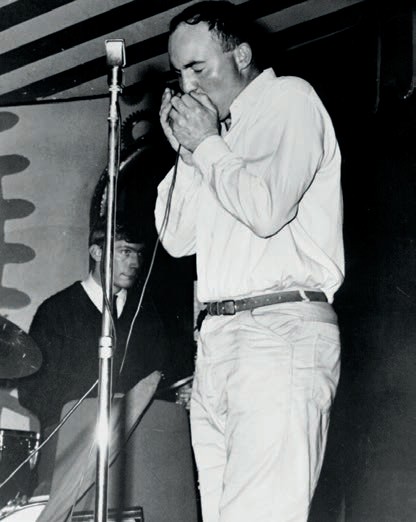
Early doors: playing with Cyril Davies at the Marquee Club, London, 1962
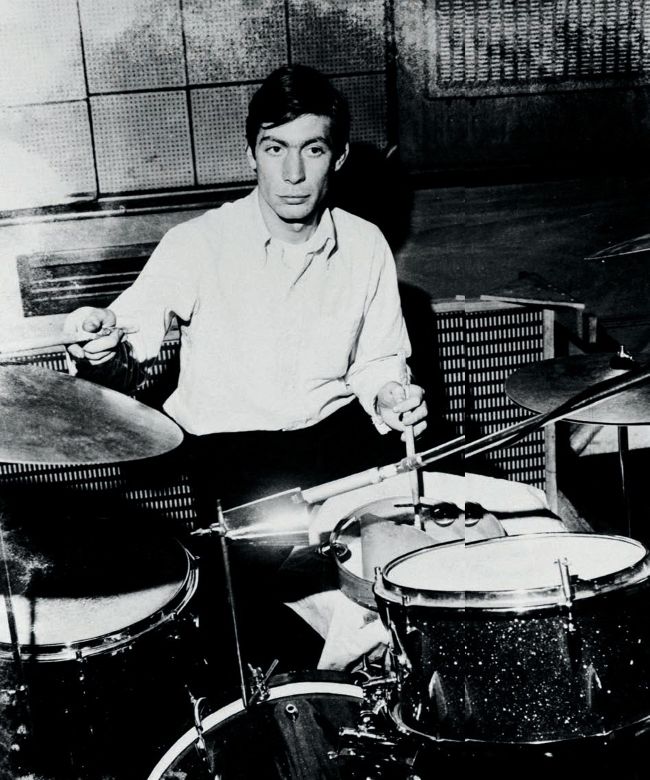
Watts, "a God-given drummer", circa 1963
KEYSTONE FEATURES/HULTON ARCHIVE/GETTY IMAGES; MICHAEL OCHS ARCHIVES/GETTY IMAGES