Balkan up the wrong tree?
A Soviet Bloc powerhouse with a modest fleet and big ambitions, Balkan appeared to have it sussed. That was until communism collapsed and privatisation prevailed. Alex Mladenov recounts the story of the Bulgarian airline from boom to bust
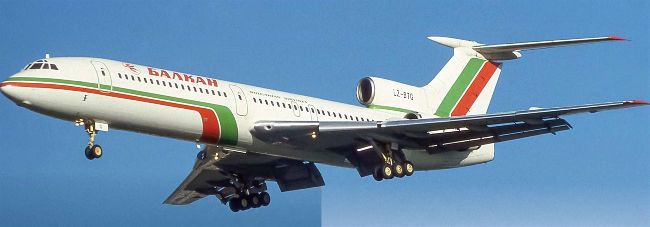
Tupolev Tu-154s were deployed on many of Balkan’s European, North African and Middle Eastern links
Bulgaria’s Balkan is well known as a thriving flag carrier of Eastern Europe’s Communist era. However, it proved ill-suited to cope with the challenges faced after that time – not long after the loss of its all-important government support, the airline went broke. So, where did it all go wrong?
In its definitive form, the state-owned air carrier was established in 1968, during a major reorganisation of Bulgaria’s state-run civil aviation system, receiving the official name State Enterprise Bulgarian Airlines Balkan – Transport Aviation branch. It was better known as Balkan Bulgarian Airlines – or simply ‘Balkan’. The airline inherited the well-developed scheduled international services network of its predecessor, Bulgarian Civil Air Transport (BCAT) TABSO. At the time, the existing route network stretched from the Bulgarian capital, Sofia, to destinations in the Soviet Union and all the East European states under Communist rule, as well as a number of West European capitals.
At first, Balkan fielded an all-Soviet-made fleet inherited from TABSO. This comprised of 25 aircraft, used to maintain international air links from the county as well as serving a few domestic destinations.
This figure included no fewer than eight Ilyushin Il-18D/E turboprops (NATO reporting name: Coot) in addition to two Antonov An-24 Cokes, nine Il-14 Crates and half a dozen Lisunov Li-2 Cabs – Soviet licence-built Douglas DC-3s – which were nearing retirement.
The Antonov An-12 Cub was also introduced in 1968 and proved a big success – the fleet eventually grew to four aircraft, contributing to the rapid development of Balkan’s much-profitable ad-hoc charter cargo business. Two examples were written off in non-fatal accidents over the years and subsequently several additional examples were acquired or dry-leased. This way, the An-12 fleet was maintained at three to four aircraft at any time throughout the 1980s and 1990s.
Balkan also became a jet operator in 1968, with the entry into service of the Tupolev Tu-134 Crusty. By 1970, its jet fleet had grown to six examples and a total of 16 68-seat Tu-134s and Tu-134As were eventually included in the fleet over the years. Two aircraft were lost in fatal crashes, in 1978 and 1984 respectively.
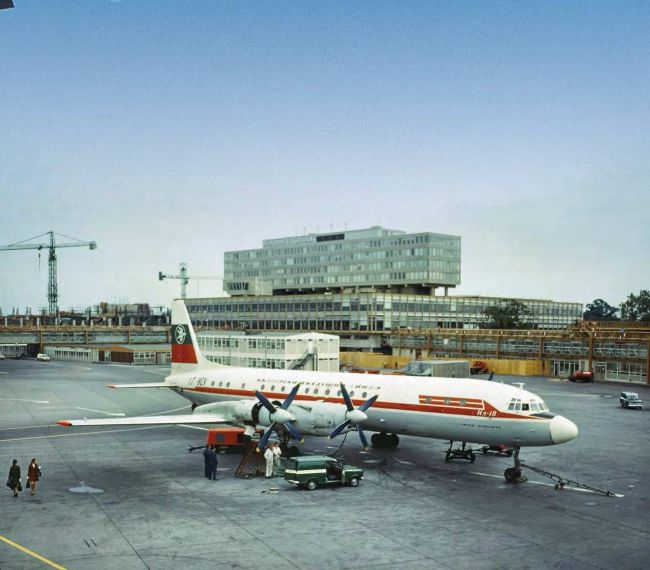
Balkan was created following the restructuring of Bulgaria's previous state-owned airline, TABSO
The last examples of the Soloviev D-30-powered twinjet continued in revenue operation until 1994, serving many destinations within Europe and North Africa, as well as maintaining domestic services from Sofia to Varna and Burgas in the busy summer months, complementing the hard-working An-24s.
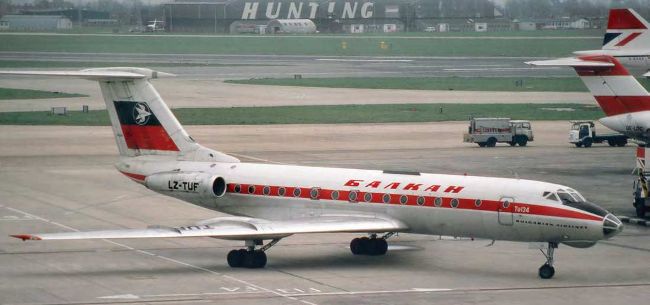
The Sofia-based carrier introduced the Tupolev Tu-134, its first jet type, in 1968 and would eventually operate 16 examples of the 68-seat airliner
Growth spurt
Using its Il-18 and Tu-134 fleets, Balkan embarked upon a significant expansion of its international route network, rapidly developing new destinations in Western Europe and Northern Africa, as well as expanding its charter services. By 1971, the airline’s operations stretched across more than 15,400nm, while the number of passengers carried reached 1.15 million.