CAMERA CINIC
Master the art of modern photography
This month:
Night-time photography With winter’s shorter days, now is the time to explore the darkness
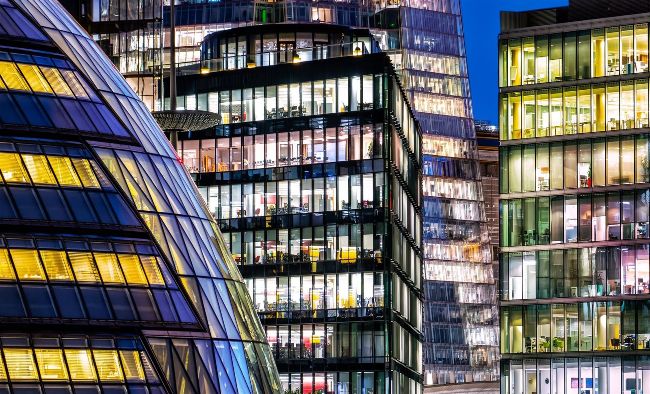
Nightfall brings along wonderful and often unique photo opportunities.
Will Cheung
An imaging journalist and freelance photographer based in London, Cheung has a wealth of experience over several decades. www.williamcheung.co.uk
Thanks to digital capture, shooting at night has never been easier. The incredible image quality possible with super-fast ISO speeds means that you can walk around shooting night photos handheld. The main benefit, though, is digital itself. Sensors can record details in scenes that may not even be visible to the naked eye.
What’s more, this sensitivity is linear, unlike film. Film emulsion is formulated to provide consistent results within a particular exposure range, which might be, for example, 1 sec to 1/2000 sec. Make exposures outside that range and there is an effective loss of speed. If you’ve worked out a film exposure as 8 secs, you might need 16 secs or even 30 secs to give a correct shot and there comes a point when the speed loss is so great it’s not worth the effort.
Digital cameras, in terms of exposure, behave at night as they do in daylight and that makes photography when there’s not much light around easy – of course, the instant feedback helps, too. Night photography still needs light of some sort. Most of the techniques discussed in this month’s Camera Clinic rely on light generated by humans, including street lamps and car lights. There’s also the creative potential of adding light using torches and flash.