FLYING BLIND
LET'S SET A SCENE.
AS A NEW DC UNIVERSE PREPARES FOR LAUNCH, WE REVISIT PIONEERING SPIN-OFF SUPERGIRL — THE FIRST MAJOR BIG-SCREEN ADVENTURE FOR A FEMALE SUPERHERO. AS ITS MAKERS TELL US, IT WAS UNCHARTED AND OFTEN VERY ODD TERRITORY…
WORDS MIKE RYAN
PAUL SHIPPER
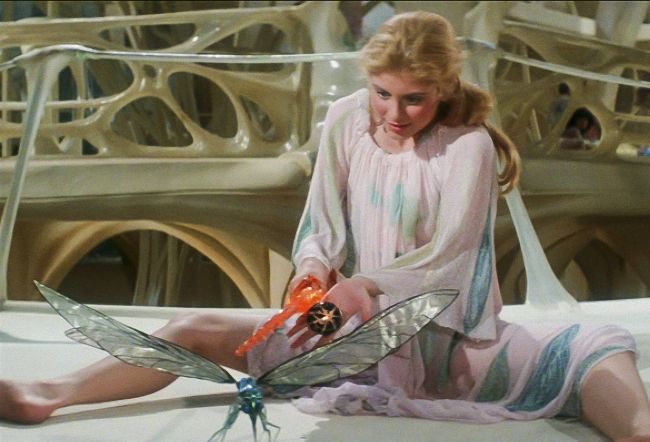
Facing page, clockwise from top left: Superhero naif Kara (Helen Slater);
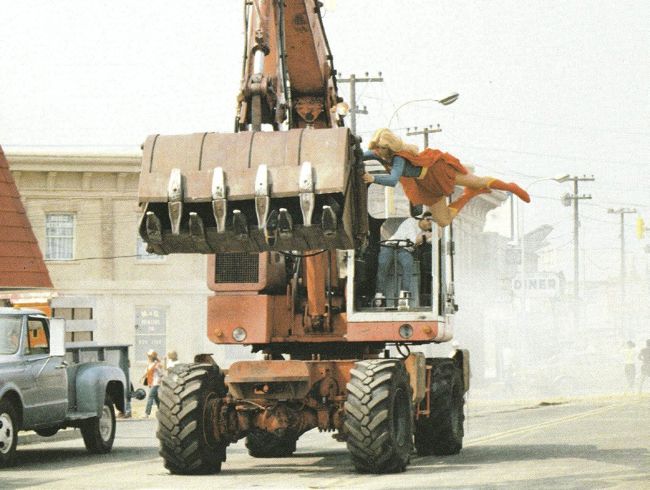
Can you dig it?;
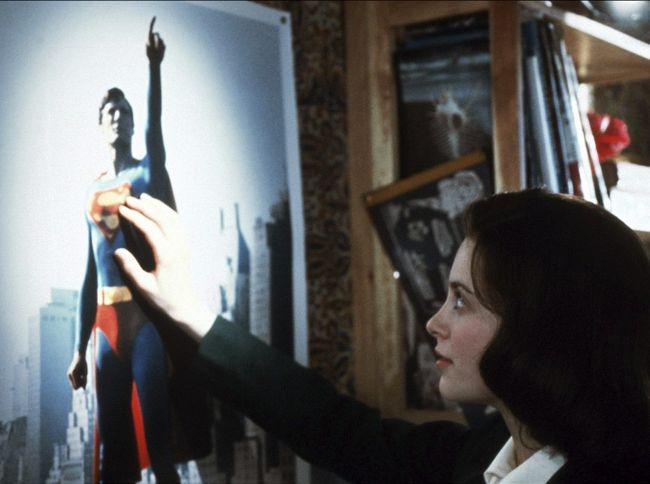
Kindred spirits;
Let’s say you’re the producer of two extremely successful Superman movies, with a third on the way. Let’s say you’re looking to expand the Superman cinematic universe with another superhero. Ah, Supergirl! An inspired choice and, frankly, ahead of its time. And you’ll cast it with a likeable, wide-eyed unknown as the title character, just like 1978’s Superman.
Dolly Parton, you think, would be great as the villain. Oh — she doesn’t want to do it. Let’s get a moustache-twirling Faye Dunaway! Peter Cook as her smothered-in-wearied-sarcasm warlock-boyfriend called… Nigel? Perfect. While we’re at it, let’s just cast the rest of the film with a smorgasbord of screen legends who all seem to be acting in their own private movie. Peter O’Toole wants to ad lib a scene where he squirts some sort of unidentified liquid into Supergirl’s mouth? While repeating the word “squirt” over and over for no discernible reason? Sure.
Welcome to one of the campiest films of the 1980s. Which is really saying something.
The formula of hiring an unknown for the lead and then surrounding them with legendary actors had worked before. In Richard Donner’s Superman, the critical hit and financial juggernaut that would launch the modern superhero movie as we still know it today, a young Christopher Reeve was cast in the title role, with the supporting characters filled out by Hollywood luminaries like Marlon Brando, Gene Hackman and Ned Beatty. Superman would go on to make $300 million (in 1978 money), while its 1980 follow-up, Superman II, made a still robust $216 million. (Superman III took home a mere $80 million, but Supergirl was already in production.)