INTEGRATED GRAPHICS SHOOTOUT
Intel Lunar Lake takes on AMD Strix point for mobile supremacy
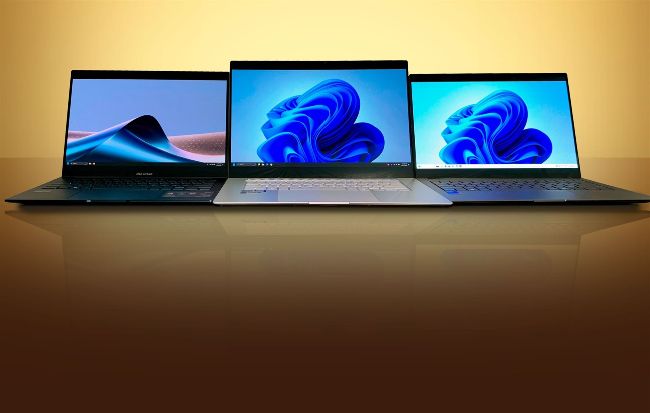
Intel’s Lunar Lake represents the most potent iGPU
Intel has ever created, providing a decent bump over the prior generation Meteor Lake, and even taking down AMD’s current top
16 CU solution.
GAMING LAPTOPS have grown in popularity over the years, but they’re often heavier and noisier than models that use integrated graphics. AMD and Intel have both released new mobile processors in recent months, with beefed-up GPUs that have taken over the budget sector of the graphics market.
It’s telling that we haven’t seen much in the way of new budget mobile GPUs in the past few years. Nvidia still offers older Turing and Ampere-derived solutions in the MX550 and MX570, but without any of the RTX features, like DLSS and ray tracing. Those were both launched in March 2022, but if you only need that level of
graphics performance, you might find that the latest iGPUs from AMD and Intel are sufficient.
We collected three similarly configured laptops and put them through a gaming test suite to see how well the latest integrated graphics solutions perform. We also ran benchmarks on a gaming laptop with a dedicated RTX 3050 Ti as a point of comparison, but there are caveats with that system that we’ll cover in a moment.
Turn the page, and we’ll discuss the major selling points of the latest processors and see how they stack up.
–JARRED WALTON
MEET THE CONTENDERS
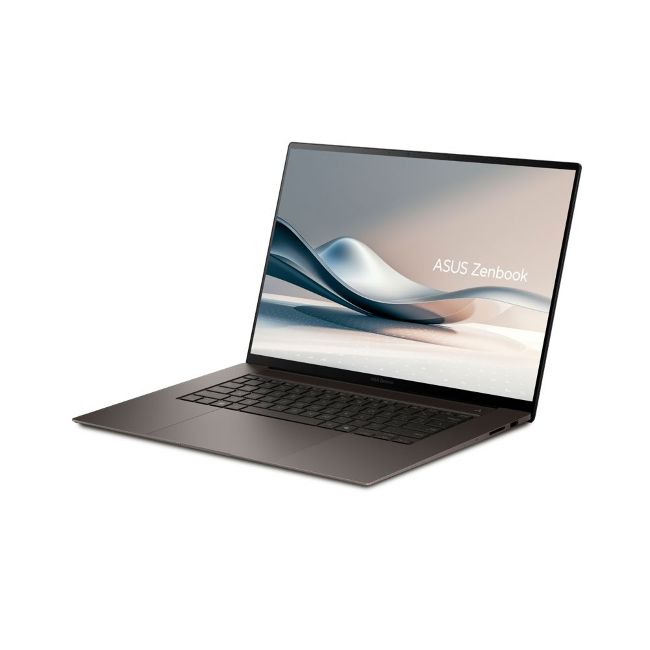
Asus’s Zenbook S16 with AMD Ryzen AI 9 HX 370 comes with a larger 16-inch chassis and screen, but don’t worry, we tested it with the same 28W power limit as the smaller Intel laptops.
Zenbook S16
CODENAMED STRIX POINT,
AMD’s latest mobile processors come with Ryzen AI branding—the AI is for the integrated NPU and support for Copilot+, with the NPU offering up to 50 TOPS of INT8 compute. On paper, it’s easy to see this as the laptop to beat, as far as gaming performance on integrated graphics goes. AMD has far more experience in the graphics arena, both with the GPU hardware and the drivers that make the GPU work.
The HX 370 processor sits close to the top of AMD’s current mobile product stack, with 12 CPU cores (four Zen 5 and eight Zen 5c), and Radeon 890M graphics. There’s an HX 375 as well, but the only difference is 55 TOPS from the NPU instead of 50 TOPS, and we’re focused on the iGPU for this investigation.
The Radeon 890M features the RDNA 3.5 architecture, which is basically RDNA 3 plus some efficiency optimizations to improve battery life and performance. It comes with 16 Compute Units (CUs)— 33 percent more than the previous generation 780M and 680M solutions. It also clocks at up to 2,900MHz in theory, which gives it a potential 5.94 teraflops of FP32 compute. In practice, across our 24 game test suite, the 890M averaged closer to 2,000MHz, plus or minus around 200MHz, depending on the game. That drops real-world compute down to around 4.10 teraflops.