LETTERS
WE TACKLE TOUGH READER QUESTIONS ON...
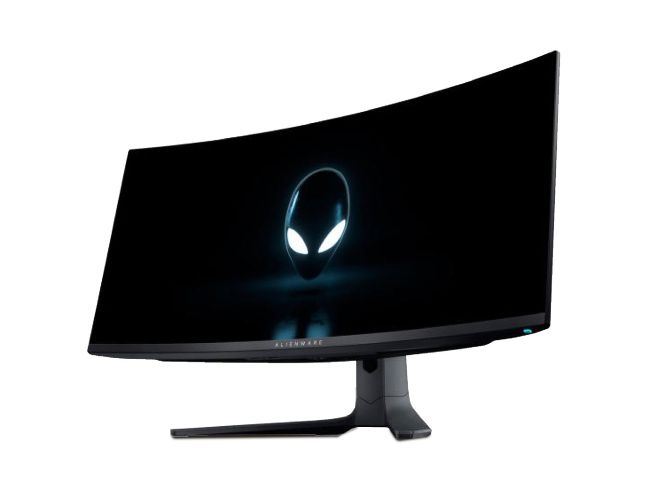
The Alienware AW3423DWF: once you've gone OLED, it's hard to go back, despite the occasional drawback.
> Monitor upgrad
> Intel concer
> Physical feedback
HDR or bust?
After years of reading about the supposed benefits of HDR visuals, I’ve finally decided to see what all the fuss is about.
I have a decent gaming rig with a Ryzen 7800X3D and an RTX 4080, but I’ve never really splashed out on a gaming monitor.
So, I’m finally going to make the jump from a regular SDR monitor to something with HDR capability. But do I need to fork out for a pricey OLED panel, or can LCD monitors get the job done?
Thanks in advance.
– J. Cunningham
CONTRIBUTOR, JEREMY LAIRD,
RESPONDS:
Okay Jim, this one is actually pretty straightforward. If you want to experience HDR visuals, there’s only one real option: you need an OLED monitor.
It’s true that various flavors of supposedly HDRcapable LCD monitors are available, many of them for a lot less money than OLED. But they’re also all various flavors of youknow-what. Entry-level LCD HDR monitors that lack local dimming aren’t HDR at all; they’re just a bit brighter than a standard LCD, and might have better color coverage.
Step up to an LCD with full-array local dimming, and you'll get a screen that’s technically capable of HDR. But even the highest-resolution backlights are very, very low precision. Allow me to explain just how low precision.