BON IVER
Sable, Fable JAGJAGUWAR
Justin Vernon returns with an “epilogue” to his sad-troubador narrative.
By Laura Barton
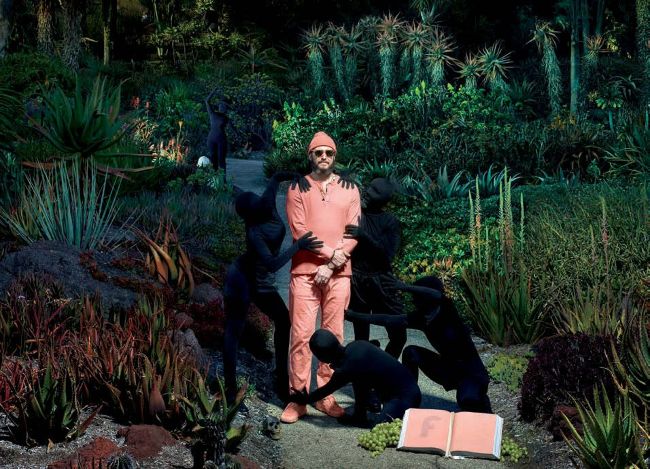
Tickled pink: Bon Iver’s Justin Vernon
GRAHAM TOLBERT
9/10
LAST autumn, Wisconsin band Bon Iver released a new song named “Speyside”, a pared-back and rueful composition in which Justin Vernon’s voice clung only to guitar and pedal steel. It was an astonishing piece of songwriting, but its demeanour was familiar; many wondered whether it might signal a doubling-back to the folky and forlorn terrain of their first album, For Emma, Forever Ago, after so many years in the experimental wilderness.
Bon Iver is now a band of 18 years and five albums’ standing. Their shape and size has been fluid, and their output diverse. But their career to date has been a lesson in the unfaltering power of narrative. Their 2007 debut was a record of startling perfection, and the story that accompanied its release – of a lovelorn songwriter retreating to a cabin in the Wisconsin woods to write a break-up record – was so beguiling, so thoroughly seductive, that for nearly two decades it has been hard to outrun.
After an absence of six years, Sable, Fable is not, in either mood or music, another For Emma…. Rather, it is an album of great texture and variety, one that directly addresses the weight of that sad-troubadour reputation. It has been billed as “the epilogue” to the Bon Iver catalogue, with the faint suggestion that Vernon, who has no plans to tour these songs, could move on entirely.
The album falls into two parts. Sable is the record’s introspective half, made up of the three songs released on last year’s “Sable” EP. It is named for the darkest black, and opens with the track “Things Behind Things Behind Things”. “I would like the feeling/Gone”, it begins, and pushes anxiously forward, pedal steel layered over tachycardic drums, Vernon’s voice holding something strained and irretrievable. “Speyside” follows, then “Awards Season”, a song that sets out plainly and moves through a saxophone solo, choral backing and keys to land somewhere tender. “I’m a sable”, he notes at one point. “And honey, us the fable”. It’s a classic Bon Iver line: perplexing on the page, profound in the singing.