CLASSIC ALBUM
OLDER GEORGE MICHAEL
INSPIRED BY THE GRIEF OF LOSING HIS PARTNER, GEORGE MICHAEL’S EXPANSIVE, HIT-FILLED MASTERPIECE WAS AMONGST THE MOST POWERFUL STATEMENTS OF HIS CAREER
IAN WADE
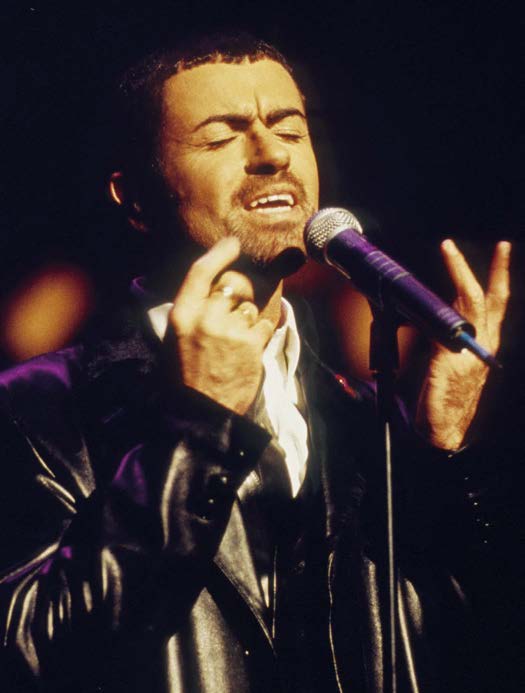
George Michael performs at the MTV Europe Music Awards held at the Brandenburg Gate in Berlin, November 1994
© Alamy
While the gap between Older and George Michael’s previous album – 1990’s Listen Without Prejudice Vol 1 – had been approaching six years, the singer hadn’t exactly been idle during that time. Despite not wishing to tour the album,George’s time was mostly spent trying to extricate himself from his Sony contract. Following the end of Wham!, he’d signed a new eight-album solo deal with the label in 1988, and after the blockbusting success of his debut solo LP Faith selling 14 million copies worldwide, he renegotiated the deal befitting his new status, and to give him the sort of comeback that reflected other acts of that stature.
Listen Without Prejudice Vol 1 – despite him not wanting to promote it to the degree that he’d done with Faith, or having his face on the sleeve – fared relatively poorly in comparison with just five million sales. His argument was that the label had decided to not promote Listen Without Prejudice due to his decisions, and that it also would restrict him from having any control over his image or seeking out a new deal. George posited that the set-up of Sony, and indeed the wider music industry, led to an imbalance of power and that the label existed to just sell music and to have full say over what his future material and releases were.
Under the terms of the 1990 contract, George had been advanced £1 million in 1992 to start on Listen Without Prejudice’s follow-up, which was returned to the company later that year ahead of filing the lawsuit in October. However, George lost the case, as the judge pointed out he’d basically agreed to the contract’s terms by requesting an advance in 1992, and that the label had every right to expect a recoupment of the costs they’d laid out. Although George stated he’d no longer record for Sony even if he lost the case, the label sold the contract to rival record companies Virgin and DreamWorks in 1995.
UNDER THE TERMS OF THE 1990
CONTRACT, GEORGE HAD BEEN ADVANCED £1 MILLION TO START ON LISTEN WITHOUT PREJUDICE’S FOLLOW-UP
Virgin were granted worldwide rights with DreamWorks working the album in the US and Canada – all of these releases were to be co-labelled with Aegean Records, a record company set up by George and cousin Andros Georgiou in 1991.
Not only did George have all this on the go, he also fell in love, when in 1991 he met Anselmo Feleppa, a Brazilian fashion designer at Rock In Rio. By the time the two had established their relationship, Feleppa discovered that he was HIVpositive, and died in March 1993 as a result of an AIDSrelated brain haemorrhage.
During all this, George still worked. The Cover To Cover Tour ran from January until October 1991, a jaunt that he claimed was to allow him to perform some of his favourite songs rather than a full-on promotion of Listen Without Prejudice. It birthed a No.1 single with Don’t Let The Sun Go Down On Me, a duet with Elton John, which they’d first performed together at Live Aid in 1985. This was followed in 1992 by Too Funky – George’s final Sony single – which he had originally planned to be part of Listen Without Prejudice’s follow-up, but instead donated it, alongside two other songs, to the Red Hot + Dance compilation raising money for AIDS awareness. It reached No.4 that June ahead of his court case. After appearing with Queen at the Freddie Mercury Tribute Concert in April 1992, his version of Somebody To Love alongside a duet with Lisa Stansfield on These Are The Days Of Our Lives appeared on the Five Live EP which also reached No.1 in April 1993.