Special Report: Potassium
The who, what and why of this important mineral
By Dr Justine Butler, Senior Health Researcher, Viva!Health
POTASSIUM
SPECIAL REPORT
Are you getting enough?
More than 1,000 years ago, an ancient Persian medical text advised eating less meat and pastries and more spinach, to help reduce high blood pressure. Fast-forward to 2019 and the message hasn’t changed. But how does potassium fit into the story? Are we getting enough or are some people falling short? Does it matter, and what can you do about it?
Every cell in our bodies requires potassium to function. It plays a key role in balancing fluids in our bodies, aids with nerve signal transmission and helps our hearts function normally. It’s required for secretion of insulin by the pancreas, for carbohydrate metabolism and protein synthesis. A diet rich in potassium helps maintain healthy blood pressure, kidney function and can help prevent kidney stones by neutralising acid.
HOW MUCH DO I NEED?
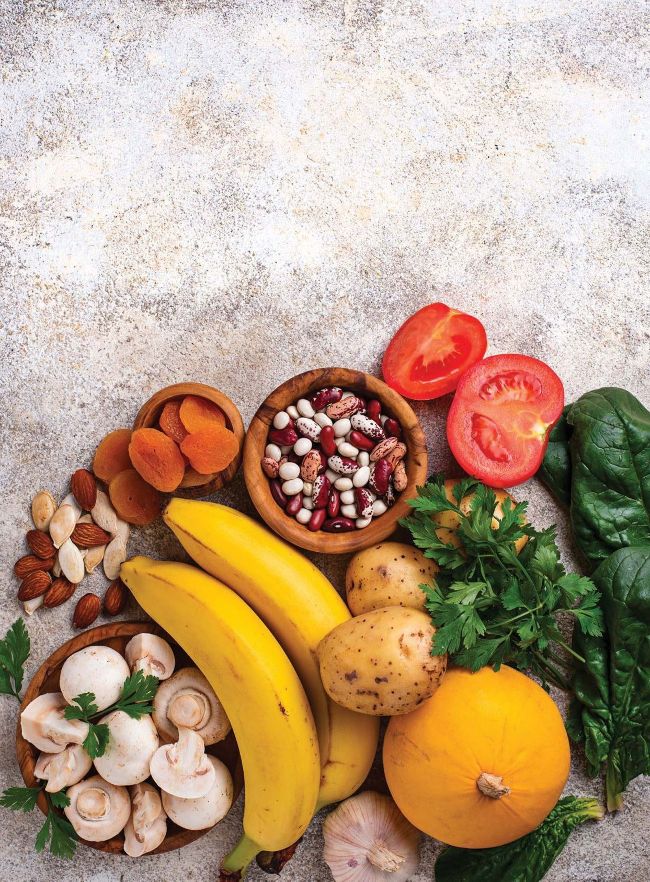
Adults need 3,500 milligrams of potassium a day, with no increase needed during pregnancy or while breast-feeding. A medium baked potato contains just over 1,000 milligrams, an avocado contains around 650, a tablespoon of kidney beans has 1,700, and a large banana, around 400. Reassuringly, you should be able to get all you need from your daily diet. Having said that, a recent National Diet and Nutrition Survey found that one in three teenage girls and one in four adult women were failing to meet the targets for potassium.