Out Of This World
Thirty years ago, Marillion released their final album on EMI, their first not to reach the UK Top 10. Afraid Of Sunlight has since been hailed as one of the band’s greatest recordings, but tragedy lay at its heart, even though it kickstarted their career as one of the most successful independent groups. The band recall the challenging times that threatened their career and, at times, their sanity.
Words: Philip Wilding
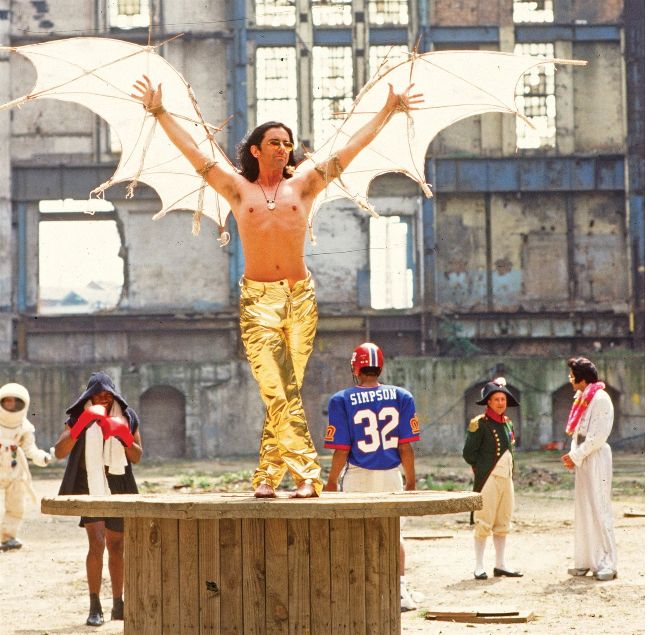
One of the
Afraid Of Sunlight
promo shots, giving distinct Village People vibes!
Image: Paul Cox
Do you know what was really amazing?” asks Steve Hogarth. “It was like it had sunk the day before, but in fact, it had been down there for nearly 40 years. It still had the Union Jack on the tail fin, and it was still so blue, so much of it was still intact.”
“I was at the end of the pier taking photos, as the craft broke the surface of the water and they hauled it out of the lake, while all of the world’s press were a hundred yards behind me behind a barrier,” continues Steve Rothery. “It was quite spooky when I think about it. Like someone raising the Titanic.”
“I remember watching [the accident] happen on the news, I was just a kid,” says Hogarth. “This weird, lobster-shaped machine suddenly doing a backflip and noticing that my mum was crying and wondering what the significance of that was. I was too young to really get it.”
“Afraid Of Sunlight escaped more than it was released.”
Steve Hogarth
On January 4, 1967 Donald Campbell would make history for all the wrong reasons when his Bluebird K7 craft flipped over during a water speed record attempt on Coniston Water in the Lake District, shattering into pieces and killing Campbell instantly. The infamous footage of Campbell’s craft flying helplessly intfhigh: ‘Let’s get what we can out of this
o the air to its doom sparked something in the young Steve Hogarth and inspired him to begin writing a pivotal part of the Afraid Of Sunlight album: Out Of This World.
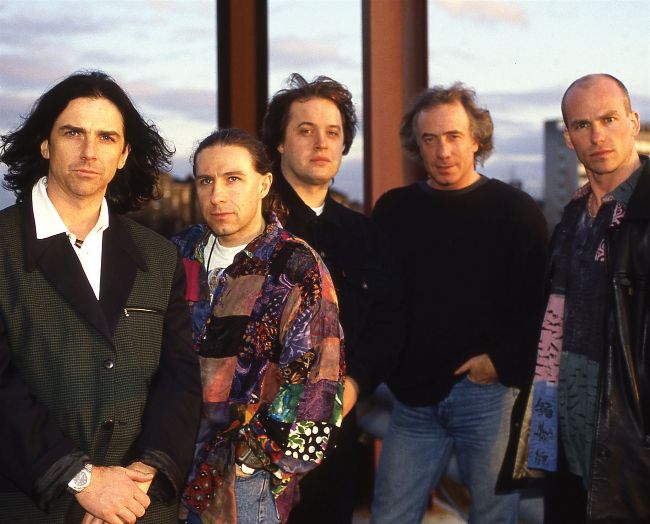
Marillion, L-R: Steve Hogarth, Pete Trewavas, Steve Rothery, Ian Mosley, Mark Kelly.
GEORGE CHIN/ICONICPIX
“The album just flowed. Top to bottom it took something like three months to make.”
Ian Mosley
“I’d started writing some of the lyrics before I’d even joined the band, I think, I had a handful of lines,” he says. “And then later when I was writing the lyrics, developing what I wanted to say, I thought of it being a little bit of a love song about his wife’s take on it, how maybe he doesn’t love her enough to take his life in his hands like this, made it into something more than a bloke just driving fast over water.”
Either way, the song would catch the ear of one Bill Smith, an underwater surveyor and diver who, inspired by Out Of The World, created The Bluebird Project and set about bringing both the K7 and Campbell back to the surface. And that’s why in the spring of 2001, both Steve Rothery and Steve Hogarth found themselves on the pier at Coniston Water watching the centre hull of Campbell’s ill-fated Bluebird breaking the waters that had once carried it and him away.
“Some songs have influence in places we couldn’t have imagined,” says Hogarth.
“That Bill heard that song and thought, ‘Right, I’m going to see if I can go find it’, and that I ended up singing the song at Donald Campbell’s funeral at [St Andrew’s] Church in Coniston in 2001 was a very weird experience, not least because it came out of this record.”
That song may have helped change the course of history, but in 1995 the band who created it were struggling to tell their story. Although the previous year’s Brave album had been something of a creative landmark for the post-Fish Marillion, the band were at odds with their record label, EMI, after the record had run over time and budget and fallen foul of their A&R man who felt the band had deliberately attempted to undermine him. They hadn’t, but there’s still a feeling that both parties won’t be swapping Christmas cards anytime soon. Still, somehow after the Brave project, Marillion were allowed one more record: Afraid Of Sunlight.