DRIVE STORY
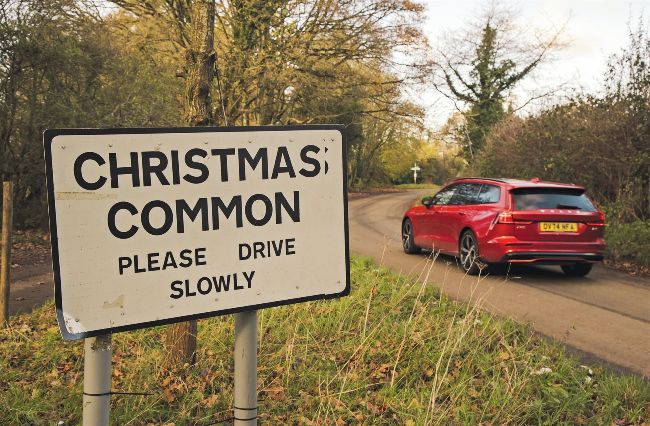
CHRISTMAS COMMON
PLEASE DRIVE SLOWLY
After dropping its long-revered estates from the UK line-up, Volvo has decided they have a place after all. MATT PRIOR celebrates their return
PHOTOGRAPHY
JACK HARRISON
L
ike Subbuteo, the church, salad cream or Jaguar, the Volvo estate seems like one of those things that just ought to
be around even if you’re not actually going to use it. There will always be Volvo estates, won’t there?
There have been for more than 70 years. In fact, people have been making Volvo estates since before even Volvo could be bothered. Volvo introduced a car called the PV445 in 1949, when you could buy just a chassis and the bare mechanicals, onto which coachbuilders started to put estate bodies. Shortly after that, Volvo decided it would be a good idea to do the same itself, which it did with the Duett, of 1953. It was more like a van with windows than a car, really, but the idea of the boxy, practical Swedish family wagon was born and has been with us ever since.
With us in the UK, that is, until last year, because we’ve been buying so many SUVs here. Volvo originally thought its foray into SUVs would be a niche thing, but it has found itself almost by accident becoming an SUV company. Traditional estates had become so slow-selling here that the manufacturer decided it wasn’t worth its trouble bringing them in. So they were canned.
You could still get Volvo estates elsewhere, of course, but SUV-mania has taken hold in the UK even more than it has in other countries. Globally in 2023 47% of all new cars sold were SUVs, although this includes cars such as the Tesla Model Y, the world’s bestselling SUV, which isn’t much of an SUV at all: it’s an MPV in need of anew name.