PEGASUS
spreads its wings
As Pegasus Airlines goes from strength to strength, Edward Paine discovers its plans for continued growth and the development of its transit passenger network
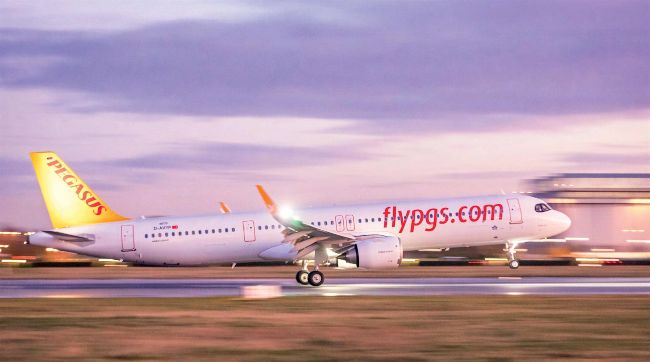
Pegasus Airlines first took to the skies in April 1990 and operates a significant portion of its flights from its home hub at Istanbul/Sabiha Gökçen airport
ALL IMAGES PEGASUS AIRLINES UNLESS OTHERWISE STATED
Turkish low-cost carrier (LCC) Pegasus Airlines is setting its sights on further growth this year following 12 months of rapid expansion in 2024. With a route map enveloping 53 countries and a fleet of 120 aircraft – 105 of which are new Airbus A320neo and A321neo airframes – the airline is poised to further extend its reach into previously untapped markets throughout 2025. Pegasus currently serves 142 airports, capturing 27% of the domestic Turkish market, plus 14% of the country’s international flights. It plans to leverage the geographical advantage gained from having its primary base in Istanbul – neatly situated between Europe, Asia, Africa and the Caucasus – to scale its network.
According to OAG data recording the number of departing one-way seats for January 2025, Pegasus is Europe’s seventh largest airline. It distinguishes itself from other regional competitors as a “network LCC” benefitting from transit passengers passing through its network of bases, including its main hub at Istanbul/ Sabiha Gökçen, the rapidly growing facility on the Asian side of the Bosphorus.
The carrier was founded as a joint venture in 1990 by a consortium of companies including Aer Lingus. In 2005 it was sold to a family-run Turkish firm and now ranks as the second largest airline operating in the country by fleet size; behind the national flag carrier, but ahead of AJet, SunExpress, Corendon Airlines, Freebird Airlines and Tailwind Airlines.